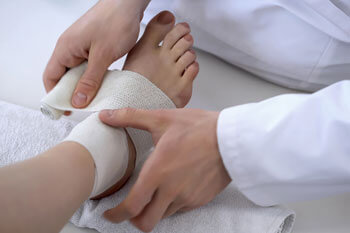
Sprained ankles may occur when a person accidentally rolls, twists, or turns their ankle in an awkward way. When this occurs, ligaments in the ankle are being forced beyond their range of motion, thus causing an injury. Some symptoms that point to having a sprained ankle may include swelling, bruising, tenderness, and pain inflicted on the affected area. Some may also experience restricted range of motion or feel instability in the ankle.
There are many factors that play into the cause of ankle sprains. Simple, everyday activities like walking can lead to an ankle sprain if the activity is being done on an uneven surface. The same goes for running or exercising. Those who partake in sports may be more susceptible to obtaining a sprained ankle because they’re more likely to fall or land uncomfortably after a jump, which can lead to an injury.
It’s important to note that some of the main risk factors that can lead to sprained ankles are improper footwear, a prior ankle complication, weakness or lack of flexibility in the ankle region, and as mentioned above, uneven surfaces and involvement in sporting activities.
To better prevent an ankle sprain, it’s recommended to warm up before partaking in intense physical activities, use caution when walking or running on rough surfaces, consider using tape or wearing a brace on a previously injured ankle, and avoid frequently wearing footwear that puts tension on your ankles, like high heels.
In order to alleviate some discomfort caused by an ankle sprain, it’s recommended to get plenty of rest, try icing the affected area, keep the ankle elevated, and wrap or compress the ankle so it has little to no motion. For a professional diagnosis and information on treatments for a sprained ankle, consult with a podiatrist.
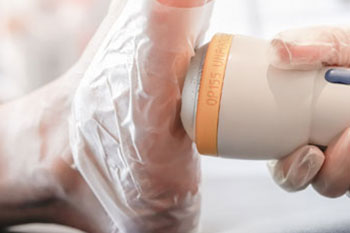
SoftWave Shockwave Therapy
What is a shockwave?
Shockwaves are acoustic pulses with high positive pressure, fast and steep rise time followed by comparatively small negative pressure (tensile wave).
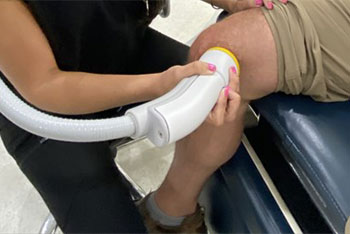
The science behind SoftWave
Extracorporeal shockwave therapy (ESWT) produces highly effective shockwaves that initiate biological regeneration processes at the cellular level.
Mechanotransduction Mechanism with 3 Phases
- PHYSICAL – Generates a large positive pressure wave followed by a negative pressure wave.
- CHEMICAL – Mechanical stimulus leads to biochemical reactions. Biomolecules are released and cell signaling is activated.
- BIOLOGIC – Angiogenesis, inflammatory modulation, stimulation of tissue regeneration.
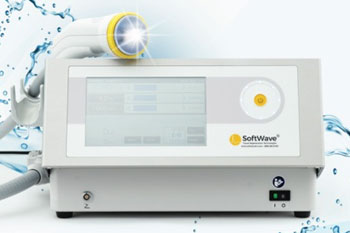
SoftWave’s OrthoGold broad-focused proprietary electrohydraulic device creates a shockwave immediately at the start. This allows energy to be distributed in a superior way.
The patented parabolic reflector generates a primary and secondary wave that spreads the shockwave over a wider and deeper therapeutic treatment zone.
This allows for maximum tissue penetration to enhance the biological effects.
Upon delivery, a cellular response is triggered activating the body’s natural healing process resulting:
Increased blood supply resulting in angiogenesis – the formation of new blood vessels to increase blood flow.
The proliferation of smooth muscle cells to restore tissue elasticity and support tissue remodeling and regeneration.
Activation of endogenous growth factors.
A COMPREHENSIVE REGENERATIVE MEDICINE SOLUTION
offering unsurpassed versatility for acute and chronic conditions
- Stress Fractures
- Over-Use Injuries
- Shin Splints
- Scar Tissue/Adhesions
- Achilles Tendinopathy
- and more


